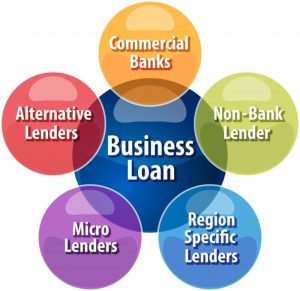
Securing funding for a business can be a pivotal moment, and the choice between government grants and business loans significantly impacts a company’s trajectory. This exploration delves into the intricacies of both options, comparing application processes, eligibility criteria, financial implications, and long-term strategic effects. Understanding the nuances of each funding source is crucial for making informed decisions that align with your business goals and risk tolerance.
We’ll examine the distinct advantages and disadvantages of grants and loans, highlighting how each affects cash flow, balance sheets, and overall business development. From navigating the application processes and understanding repayment terms to considering ethical implications and legal requirements, this comprehensive guide aims to equip entrepreneurs with the knowledge necessary to choose the most suitable funding path for their ventures.
Funding Sources
Securing funding for a business can be a complex process, often requiring careful consideration of various options. Two primary avenues are government grants and business loans, each with its own set of advantages, disadvantages, and application procedures. Understanding the nuances of each is crucial for making informed decisions.
Application Processes: Government Grants vs. Business Loans
The application processes for government grants and business loans differ significantly. Grants typically involve a more rigorous application process focusing on the project’s merit and alignment with the granting agency’s objectives. Loans, conversely, emphasize the applicant’s creditworthiness and ability to repay the borrowed amount.
- Government Grant Application: This typically involves identifying relevant grant opportunities, preparing a comprehensive proposal outlining the project’s goals, budget, and impact, and submitting it through the designated channels. The process often involves multiple stages, including initial screening, review by a panel of experts, and potentially an interview. Successful applicants receive the funds as a non-repayable contribution.
- Business Loan Application: This generally begins with a preliminary assessment of your business’s financial health, followed by a formal application submitted to a lender (bank, credit union, or online lender). The application requires detailed financial information, including business plans, tax returns, and personal credit reports. Lenders assess the risk involved and approve or deny the loan based on the applicant’s creditworthiness and the loan’s terms.
Eligibility Criteria: Government Grants vs. Business Loans
Eligibility criteria for both grants and loans vary considerably depending on the specific program or lender. However, some common factors are highlighted below.
| Criteria | Grant Eligibility | Loan Eligibility | Notes |
|---|---|---|---|
| Business Type | Often targets small businesses, startups, or businesses in specific sectors (e.g., renewable energy, technology). May prioritize minority-owned or women-owned businesses. | Typically open to established businesses with a proven track record, but some programs cater to startups. | Specific requirements vary widely by grant program. |
| Financial History | May require demonstrating financial need, but often less emphasis than loans. | Strong credit history, positive cash flow, and low debt-to-income ratio are crucial. | Lenders assess risk based on financial statements. |
| Project Viability | Crucial; the project must align with grant objectives and demonstrate a clear benefit. | Less emphasis than grants, though a sound business plan is essential to demonstrate repayment ability. | Grants prioritize social or economic impact. |
| Location | Some grants are geographically restricted (e.g., benefiting businesses within a specific state or region). | Lenders may have regional restrictions or preferences, but generally less stringent than grants. | Geographic focus can significantly influence eligibility. |
Business Loan Repayment Terms and Conditions
Business loans involve repayment according to a predetermined schedule, typically monthly installments over a specific term (e.g., 3-7 years). Interest rates vary depending on factors such as the lender, the borrower’s creditworthiness, the loan amount, and the loan term. Interest is calculated on the outstanding loan balance. Late payments incur penalties, which can include late fees, increased interest rates, and potential damage to credit score.
The specific terms and conditions are Artikeld in the loan agreement. For example, a small business might secure a 5-year loan with a 7% interest rate and a late payment fee of $50.
Types of Government Grants Available for Businesses
Government grants are categorized based on their intended purpose. Examples include:
- Research and Development Grants: Support innovation by providing funding for research and development projects in specific industries. Examples include grants from the National Science Foundation (NSF) or the Small Business Innovation Research (SBIR) program.
- Small Business Grants: Assist small businesses with various needs, such as expansion, equipment purchases, or employee training. The Small Business Administration (SBA) offers several grant programs.
- Community Development Grants: Support projects that benefit specific communities, often focused on job creation or infrastructure improvements. These are frequently offered at the state or local level.
- Environmental Grants: Fund projects that promote environmental sustainability, such as renewable energy initiatives or waste reduction programs. Examples include grants from the Environmental Protection Agency (EPA).
Financial Implications and Impact
Securing funding for a business is a crucial step, and understanding the long-term financial implications of choosing between a government grant and a business loan is paramount. Both options offer unique advantages and disadvantages that significantly impact a company’s financial health and trajectory. This section will delve into the detailed financial ramifications of each, offering a comparative analysis to aid in informed decision-making.Government grants and business loans represent distinct paths to funding, each carrying its own set of long-term financial consequences.
While grants provide non-repayable capital, they often come with stringent reporting requirements and limitations on how funds can be used. Conversely, business loans offer greater flexibility but necessitate repayment with interest, potentially increasing the overall cost of the project or expansion. A thorough understanding of these differences is critical for successful financial planning.
Long-Term Financial Implications: Grants vs. Loans
A comparative financial model can illustrate the potential scenarios. Let’s consider a hypothetical small business needing $50,000 for new equipment. Scenario A: The business receives a $50,000 grant. Their balance sheet immediately shows an increase in assets (equipment) and equity. Cash flow improves significantly, allowing for immediate investment and potential revenue generation.
However, ongoing reporting requirements represent an administrative burden. Scenario B: The business secures a $50,000 loan at 7% interest over five years. The balance sheet shows an increase in assets (equipment) and liabilities (loan). Cash flow is initially impacted by loan repayments, but the business retains full control over its operations. Over the five years, the total cost of the loan will exceed $50,000 due to interest.
The long-term financial implications hinge on the business’s ability to generate sufficient revenue to cover loan repayments while maintaining profitability. A robust financial projection considering revenue streams and repayment schedules is vital in such scenarios.
Impact on Balance Sheet and Cash Flow
A government grant directly increases a company’s equity, improving its balance sheet’s strength and reducing its debt-to-equity ratio. Cash flow experiences an immediate positive boost, enabling quicker investment and operational flexibility. Conversely, a business loan increases both assets (through the acquisition funded by the loan) and liabilities (the loan itself). The immediate impact on cash flow might be negative due to loan repayments, although this can be offset by increased revenue from the investment.
The long-term impact depends on the loan terms and the business’s capacity to generate sufficient revenue to service the debt. For example, a business might see a temporary decrease in cash flow due to loan repayments but experience a significant increase in future revenue thanks to the acquired equipment.
Risks and Benefits of Each Funding Option
Government grants offer a low-risk, non-repayable funding source. However, they often come with restrictions on how funds can be used and involve substantial administrative overhead associated with reporting requirements. Failure to comply with these requirements can lead to clawbacks of funds. Business loans, while requiring repayment with interest, offer greater flexibility in how the funds are utilized. However, they carry the risk of default if the business fails to generate sufficient revenue to meet repayment obligations.
This could lead to severe financial consequences, including business closure. The choice depends on the business’s risk tolerance, financial stability, and the specific terms of each funding opportunity. A thorough cost-benefit analysis is essential.
Business Planning and Strategy
A successful business requires a robust plan that strategically incorporates both grant and loan acquisition to ensure sustainable growth. This plan must account for the unique characteristics of each funding source and their implications for long-term financial health and operational flexibility. A well-defined timeline is crucial for maximizing the chances of securing both types of funding and efficiently managing the application processes.A comprehensive business plan is essential for attracting both government grants and private loans.
It demonstrates the viability and potential of your venture, providing lenders and grant providers with the confidence to invest. The plan should clearly articulate your business goals, target market, competitive landscape, financial projections, and the specific use of funds. This document serves as a roadmap, guiding your business through its various stages of development and growth.
Developing a Business Plan Incorporating Grant and Loan Acquisition Strategies
A successful business plan needs to address both grant and loan applications concurrently. The grant section should highlight the social impact or community benefit of the project, aligning with the grant provider’s priorities. Meanwhile, the loan section should demonstrate the financial viability of the business, including detailed financial projections, debt repayment plans, and risk mitigation strategies. A unified plan showcases a cohesive approach to funding, strengthening the overall application.
For example, a small bakery applying for a grant to support local farmers and a loan for equipment purchases can present a compelling narrative showcasing both social responsibility and financial prudence. This integrated approach demonstrates a holistic understanding of business sustainability.
Creating a Detailed Timeline for Seeking Funding
Establishing a realistic timeline is vital for a successful funding acquisition strategy. This timeline should account for the lead times involved in both grant and loan applications. Government grants often have stringent deadlines and complex application processes. Business loans require financial documentation, credit checks, and negotiations. A sample timeline might include: Months 1-3: Business plan development and market research; Months 4-6: Grant applications; Months 7-9: Loan applications; Months 10-12: Funding secured and project implementation.
This timeline allows for parallel processing, maximizing efficiency. Adjustments should be made based on the specific grant and loan programs being pursued. Delays are inevitable, so building in buffer time is crucial.
Impact of Secured Funding on Long-Term Business Strategy and Growth
Securing funding, whether through grants or loans, significantly influences a business’s long-term strategy and growth trajectory. Grants can provide crucial seed funding, enabling businesses to focus on innovation and expansion without the immediate pressure of debt repayment. Loans, on the other hand, allow for quicker scaling but necessitate careful management of debt obligations. The choice between grants and loans depends on the specific needs and risk tolerance of the business.
For instance, a technology startup might prioritize grants to fund research and development, while an established retail business might leverage loans for inventory expansion and store upgrades. Careful consideration of these funding sources’ long-term implications is essential for sustainable growth.
Business Development and Growth
Securing funding, whether through government grants or business loans, is a crucial step in fostering business development and achieving sustainable growth. The strategic allocation of these funds directly impacts a company’s ability to expand its operations, enhance its product or service offerings, and ultimately increase its market share. Understanding the distinct advantages of each funding type and how to effectively utilize them is paramount for entrepreneurial success.Government grants and business loans offer different pathways to business expansion, each with its own set of advantages and limitations.
Government grants, typically awarded based on merit and alignment with specific governmental objectives, provide non-repayable funds. Business loans, conversely, require repayment with interest, but offer greater flexibility in terms of usage and potentially larger funding amounts. Effective business coaching can significantly enhance the ability of a business owner to navigate this complex funding landscape.
Government Grants for Business Development
Government grants can significantly boost business development initiatives by providing crucial capital for research and development, infrastructure improvements, employee training, and marketing campaigns. For example, the Small Business Innovation Research (SBIR) and Small Business Technology Transfer (STTR) programs in the United States offer grants to small businesses developing innovative technologies with commercial potential. These grants can fund research, prototype development, and initial market entry strategies.
Another example is the USDA Rural Development grants, which provide funding for businesses located in rural areas, supporting job creation and economic development in underserved communities. These funds can be used for facility upgrades, equipment purchases, and employee training programs. Successful grant applications often require a detailed business plan outlining the project’s objectives, budget, and anticipated impact.
Leveraging Business Loans for Expansion and Scaling
Business loans provide a flexible funding source for various expansion strategies. They can be used to finance the acquisition of new equipment, expansion into new markets, hiring additional staff, or increasing production capacity. For instance, a small bakery securing a loan could use the funds to purchase a larger oven, increasing production output and meeting growing customer demand. A technology startup might leverage a loan to scale its operations by hiring software developers and marketing specialists, thereby accelerating product development and market penetration.
The choice of loan type – such as term loans, lines of credit, or SBA loans – depends on the specific needs and financial circumstances of the business. Careful financial planning and a robust business plan are crucial for securing favorable loan terms and ensuring successful repayment.
The Role of Business Coaching in Funding Acquisition and Utilization
Business coaching plays a vital role in navigating the complexities of securing and effectively utilizing funding from both government grants and business loans. A skilled coach can guide entrepreneurs through the grant application process, helping them develop compelling proposals that align with funding agency priorities. Similarly, a coach can assist in developing a comprehensive business plan that demonstrates the viability and potential return on investment for a business loan.
Beyond securing funding, business coaching extends to maximizing the impact of the received funds. Coaches can help businesses develop strategic plans for allocating resources, tracking progress, and ensuring accountability, ultimately leading to more successful outcomes. They provide guidance on financial management, operational efficiency, and strategic decision-making, ensuring the funds are used to achieve the business’s long-term growth objectives.
Ultimately, the decision between government grants and business loans hinges on a careful assessment of your business’s specific needs, risk profile, and long-term objectives. While grants offer non-repayable funding, they often come with stringent eligibility requirements and limitations on how the funds can be used. Business loans, on the other hand, provide greater flexibility but entail repayment obligations, interest charges, and potential financial risks.
By thoroughly weighing the pros and cons of each option and developing a robust business plan, entrepreneurs can strategically leverage the most appropriate funding mechanism to propel their businesses toward sustainable growth and success.
Answers to Common Questions
What are the typical interest rates for small business loans?
Interest rates vary widely depending on factors like credit score, loan amount, and lender. Expect rates to range from a few percentage points to potentially double digits.
Can I apply for both a grant and a loan simultaneously?
Yes, but it’s crucial to disclose all funding sources in each application. Managing multiple funding streams requires meticulous financial planning and record-keeping.
What happens if I fail to repay a business loan?
Failure to repay can result in penalties, damage to your credit score, and potential legal action from the lender. Lenders may seize assets to recover the debt.
Are there grants specifically for women-owned businesses?
Yes, many government agencies and private organizations offer grants specifically targeting women entrepreneurs. Research opportunities tailored to your industry and demographic.