
Expanding a business into new markets presents both exhilarating opportunities and significant challenges. Success hinges on a well-defined strategy that considers market research, financial planning, and cultural nuances. This exploration delves into the multifaceted aspects of market expansion, providing a framework for strategic growth and sustainable development.
From identifying promising target markets to navigating international regulations and fostering ethical business practices, this guide offers a comprehensive roadmap for businesses seeking to expand their reach and impact. We will examine various expansion models, analyze the role of business development, and explore the importance of securing appropriate funding to fuel growth.
Developing a Business Plan for Expansion
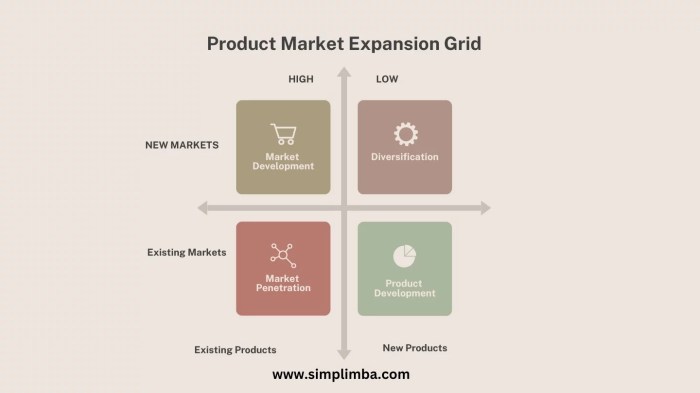
A robust business plan is crucial for successful market expansion. It provides a roadmap, outlining strategies, resource allocation, and risk mitigation, guiding your company through the complexities of entering new markets. A well-defined plan increases the likelihood of achieving expansion goals and minimizes potential setbacks. It serves as a vital tool for attracting investors and securing necessary funding.A comprehensive business plan for market expansion should be more detailed than a general business plan, explicitly addressing the unique challenges and opportunities presented by new markets.
It requires thorough market research, a clear understanding of competitive landscapes, and a realistic assessment of resources and potential risks.
Business Plan Template for Market Expansion
This template provides a framework for creating a comprehensive business plan tailored to market expansion. The sections below highlight key components to include. Remember to adapt this template to your specific industry and target market.
- Executive Summary: A concise overview of the expansion plan, highlighting key objectives, strategies, and financial projections.
- Market Analysis: A detailed analysis of the target market, including market size, demographics, growth potential, competitive landscape, and customer behavior. This section should include primary and secondary research findings, such as surveys, competitor analysis reports, and industry publications.
- Marketing and Sales Strategy: A clear Artikel of the marketing and sales strategies to be implemented in the new market. This should include details on branding, pricing, distribution channels, promotional activities, and sales targets. For example, a company expanding into a new country might adapt its marketing messaging to resonate with local culture and preferences.
- Operations Plan: A description of the operational aspects of the expansion, including logistics, supply chain management, production capacity, and technology infrastructure. This might include setting up a new distribution center or adapting existing processes for the new market.
- Management Team: An overview of the management team responsible for overseeing the expansion, highlighting their relevant experience and expertise. This demonstrates the competence and capacity of the company to handle the expansion.
- Financial Projections: Detailed financial projections, including revenue forecasts, expense budgets, and profitability analysis. This section should clearly demonstrate the financial viability of the expansion plan.
- Funding Request (if applicable): If seeking external funding, this section should Artikel the amount of funding required, the proposed use of funds, and the expected return on investment.
- Appendix: Supporting documents, such as market research data, financial statements, and letters of support.
Financial Projections and Resource Allocation
Accurate financial projections are essential for securing funding and making informed decisions. These projections should encompass start-up costs, ongoing operational expenses, revenue forecasts, and profitability timelines. Resource allocation involves determining how much capital and human resources will be dedicated to each aspect of the expansion.For example, a company expanding into a new region might allocate a significant portion of its budget to marketing and sales activities to build brand awareness and generate initial sales.
They would also allocate resources to establishing a local team and infrastructure. A realistic scenario might involve allocating 40% of the expansion budget to marketing, 30% to operations, and 30% to personnel. These percentages, of course, would vary based on the specific circumstances of the expansion. Furthermore, a detailed cash flow projection would be crucial to ensure the company has sufficient liquidity throughout the expansion process.
Risk Assessment and Mitigation Plan
Identifying and mitigating potential risks is crucial for minimizing setbacks. This involves assessing various risks, such as market entry barriers, regulatory hurdles, competitive pressures, and economic downturns. For each identified risk, a mitigation strategy should be developed.For instance, a risk might be the failure to adapt products to local preferences in the target market. The mitigation strategy could involve conducting thorough market research to understand consumer preferences before product launch and conducting pilot tests of adapted products before full-scale market entry.
Another risk might be political instability in the target market; mitigation could involve diversifying operations and having contingency plans in place to manage potential disruptions. A comprehensive risk assessment should cover a wide range of potential issues and provide proactive solutions to mitigate their impact.
Implementation and Execution of Expansion Strategies
Successfully implementing a market expansion strategy requires meticulous planning and execution. This involves a phased approach, starting with thorough market research and culminating in ongoing monitoring and adaptation. The key is to translate the strategic plan into actionable steps, ensuring resources are allocated effectively and progress is consistently tracked.
Market Entry Strategies and Implementation Steps
Choosing the right market entry strategy is crucial for success. This decision depends on factors like the target market’s characteristics, the company’s resources, and the level of risk tolerance. Implementation steps will vary depending on the chosen strategy (e.g., exporting, franchising, joint ventures, foreign direct investment). Regardless of the chosen strategy, thorough due diligence, legal compliance, and cultural sensitivity are paramount.
For example, a company expanding into a new country through direct investment might need to establish a local subsidiary, recruit and train staff, and navigate local regulations concerning business licensing and taxation. Conversely, a company opting for franchising will focus on selecting and training franchisees, ensuring brand consistency, and providing ongoing support.
Key Performance Indicators (KPIs) for Monitoring Expansion
Regular monitoring of key performance indicators (KPIs) is essential to assess the effectiveness of the expansion strategy and make necessary adjustments. KPIs should be aligned with the overall business objectives and the specific goals of the expansion. These metrics should be tracked regularly, ideally on a monthly or quarterly basis.
- Market Share Growth: Tracks the percentage of the target market captured by the company’s products or services.
- Customer Acquisition Cost (CAC): Measures the cost of acquiring a new customer in the expanded market.
- Customer Lifetime Value (CLTV): Estimates the total revenue generated by a customer throughout their relationship with the company.
- Revenue Growth in New Market: Monitors the increase in revenue generated from the expanded market.
- Brand Awareness and Recognition: Tracks changes in brand awareness and recognition within the target market.
- Return on Investment (ROI): Measures the profitability of the expansion initiative.
Managing the Complexities of Scaling a Business
Scaling a business during expansion presents significant challenges. Maintaining quality control, managing increased operational complexity, and ensuring efficient resource allocation are crucial aspects. This often requires investment in new technologies, improved processes, and enhanced human resources. For instance, a company experiencing rapid growth might need to invest in enterprise resource planning (ERP) software to manage its expanding operations more efficiently.
Another common challenge is ensuring consistent brand messaging and customer experience across different markets, which may require localized marketing strategies and adapted customer service protocols. Furthermore, effective communication and collaboration between teams in different locations are essential to successful scaling. Building a strong and adaptable organizational structure is critical to handle the increased workload and complexity.
International Market Expansion Considerations
Expanding into international markets presents a compelling opportunity for significant business growth, but it also introduces a unique set of challenges. Success hinges on a thorough understanding of the complexities involved, encompassing legal, regulatory, and cultural landscapes that differ significantly from domestic markets. Careful planning and adaptation are crucial to navigate these complexities and capitalize on the potential rewards.International market expansion offers access to larger customer bases, diversification of revenue streams, and potential cost advantages through access to cheaper resources or labor.
However, navigating unfamiliar regulatory environments, managing cultural differences, and mitigating geopolitical risks can pose significant hurdles. The optimal approach requires a balanced assessment of these opportunities and challenges, coupled with a well-defined strategy.
Challenges and Opportunities of International Market Expansion
The decision to expand internationally involves weighing numerous factors. Opportunities include accessing new customer segments, potentially untapped markets, and economies of scale. Challenges include navigating differing legal and regulatory frameworks, managing logistical complexities, adapting marketing strategies to diverse cultural contexts, and mitigating political and economic risks. For example, a company expanding into a developing market might encounter lower labor costs but face infrastructure limitations, while expansion into a developed market could offer a higher-spending consumer base but require substantial investment in marketing and distribution.
Successfully navigating these dualities requires a robust understanding of the specific target market.
Legal and Regulatory Frameworks Influencing International Market Entry
Legal and regulatory environments vary dramatically across countries. These differences significantly influence market entry strategies. Factors to consider include import/export regulations, intellectual property protection laws, taxation policies, labor laws, and consumer protection regulations. For instance, a company selling pharmaceuticals must comply with stringent regulatory approvals in each target market, while a technology company might face data privacy regulations that vary significantly.
Thorough due diligence and compliance with local laws are essential to avoid legal issues and operational disruptions. Understanding these varying frameworks often requires seeking expert legal and regulatory advice tailored to the specific target markets.
Cultural Nuances and Adaptation Strategies for International Expansion
Cultural differences profoundly impact the success of international expansion. These differences extend beyond language barriers to encompass consumer preferences, business practices, and communication styles. For example, a marketing campaign that resonates in one culture might be completely ineffective or even offensive in another. Successful adaptation strategies involve thorough market research to understand cultural nuances, localization of products and marketing materials, and development of culturally sensitive business practices.
Ignoring cultural differences can lead to significant marketing failures and damage a company’s brand reputation. Companies often employ local market experts to guide their cultural adaptation strategies.
Ultimately, successful market expansion requires a holistic approach that integrates thorough planning, robust execution, and a commitment to ethical and sustainable practices. By carefully considering market dynamics, financial resources, and cultural contexts, businesses can confidently navigate the complexities of expansion and unlock significant growth potential. The journey may be demanding, but the rewards of reaching new customers and establishing a stronger market presence are substantial.
Common Queries
What is the difference between market penetration and market development?
Market penetration focuses on increasing sales of existing products to existing customers, while market development targets new customer segments with existing products.
How can I assess the risk of expanding into a new market?
Conduct thorough market research, analyze competitor activity, assess political and economic stability, and develop contingency plans to mitigate potential risks.
What are some common mistakes to avoid during market expansion?
Underestimating market research, neglecting cultural nuances, failing to adapt products or services to local needs, and insufficient funding are common pitfalls.
What is the role of technology in market expansion?
Technology plays a crucial role, enabling efficient market research, streamlined operations, targeted marketing, and enhanced communication with customers in new markets.


